
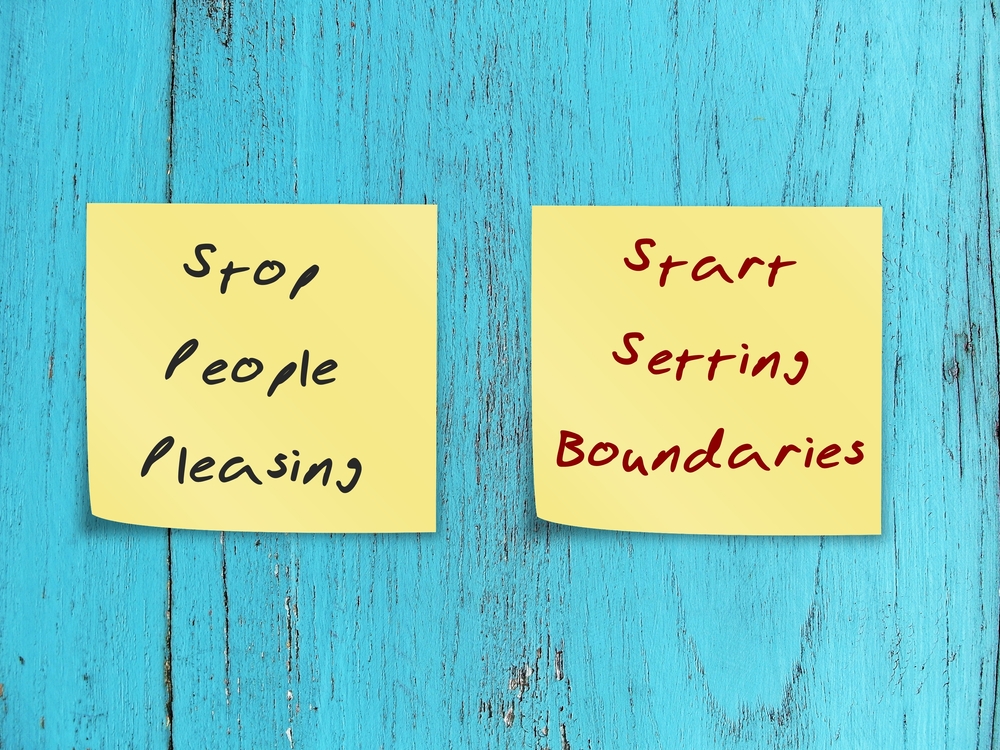
When Being “Nice” Comes at the Expense of Yourself
Do you find yourself saying yes when you really want to say no?
Maybe you automatically agree with other people to avoid conflict. You worry about disappointing someone, feel responsible for other people's feelings, or spend far too much time wondering whether someone is upset with you.
Perhaps you're so accustomed to anticipating what everyone else needs that you've lost touch with an important question:
What do I need?
There's nothing wrong with being caring, generous, or considerate. These are beautiful qualities.
People-pleasing is different.
When caring for others repeatedly requires you to ignore your own feelings, needs, boundaries, or values, there may be something deeper happening beneath the surface.
For some of us, people-pleasing isn't simply a habit.
It can be a form of protection.
What Is People-Pleasing?
People-pleasing is a pattern of prioritizing other people's approval, comfort, or needs—sometimes at the expense of your own.
It can look like:
- Saying yes when you want to say no
- Avoiding conflict at all costs
- Apologizing excessively
- Feeling responsible for other people's emotions
- Changing your opinion to avoid disagreement
- Difficulty setting or maintaining boundaries
- Worrying that someone is angry or disappointed with you
- Feeling guilty when you put yourself first
- Trying to anticipate what others need before they ask
- Seeking reassurance that everything is okay
- Feeling uncomfortable when someone is unhappy with you
On the outside, a people-pleaser may appear exceptionally accommodating and easygoing.
On the inside, however, there may be anxiety, resentment, exhaustion, or a constant sense of responsibility for maintaining harmony.
Why Do We Become People-Pleasers?
There isn't one reason.
Some people learn early that being helpful or agreeable brings praise and connection. Others grow up in environments where disagreement, anger, criticism, or unpredictability feels particularly uncomfortable.
A child might gradually learn:
If everyone else is okay, I'm okay.
If I'm easy to get along with, I won't be rejected.
If I don't upset anyone, I'll be safe.
If I take care of everyone else, maybe they'll take care of me.
These beliefs aren't necessarily conscious.
Over time, they can become automatic emotional and relational patterns that continue long after the circumstances in which they developed have changed.
This is where understanding the nervous system can help us look at people-pleasing with much more compassion.
Is People-Pleasing a Trauma Response?
Sometimes.
You may have heard people-pleasing described as the fawn response.
Most of us are familiar with fight, flight, and freeze. The term fawn is often used to describe another way people may respond to perceived threat: by appeasing, accommodating, or trying to make themselves less threatening to another person.
Instead of fighting or leaving, the nervous system may learn:
Keep the connection. Keep the peace. Don't make anyone angry.
Not everyone who people-pleases has experienced trauma, and not every act of accommodation is a nervous-system survival response.
But for some people, chronic people-pleasing develops because maintaining connection once felt safer than expressing their own needs.
When we understand this, the question begins to change.
Instead of:
Why can't I just say no?
We can ask:
What does some part of me believe might happen if I do?
People-Pleasing and Your Nervous System
Imagine that someone asks you to do something you don't want to do.
Before you've even had time to think about it, you hear yourself say:
"Sure!"
Later, you wonder why you agreed.
This is one reason simply telling someone to “set better boundaries” isn't always enough.
Your body may react before your thinking mind has had a chance to consider what you actually want.
You might notice:
- Tightness in your chest
- A knot in your stomach
- A racing heart
- An urge to explain yourself
- An immediate desire to make the other person happy
- Anxiety when someone seems disappointed
- Relief as soon as the other person is pleased again
These reactions can become deeply practiced.
Healing involves creating enough space between the trigger and your automatic response that you begin to have something people-pleasing often takes away:
choice.
What Polyvagal Theory Can Teach Us About People-Pleasing
Polyvagal Theory offers one lens for thinking about the relationship between our nervous system, safety, and connection.
As human beings, we are wired for relationship. Our nervous systems are continually taking in cues from our environment and from other people.
Tone of voice, facial expression, body language, conflict, warmth, rejection, and connection can all influence how safe or threatened we feel.
If your system has learned that disagreement threatens connection, another person's displeasure may feel much bigger than the situation itself seems to warrant.
You may intellectually know:
"It's okay if she is disappointed."
But your body may be saying:
"Fix this immediately."
This is an important distinction.
Sometimes healing from people-pleasing isn't simply learning how to say no.
It's helping your nervous system discover that disagreement does not automatically mean danger, and connection doesn't require abandoning yourself.
People-Pleasing as a Protective Part
Internal Family Systems (IFS), or parts work, gives us another compassionate way of understanding people-pleasing.
Instead of labeling the people-pleasing behavior as weak or dysfunctional, we can become curious about the part of us that learned to please others.
Perhaps that part believes:
"I have to keep everyone happy."
"I can't let anyone be disappointed in me."
"If I say what I really think, they might leave."
"My needs aren't as important."
"Conflict isn't safe."
From an IFS perspective, we don't need to get rid of this part.
We want to understand it.
You might gently ask:
What are you afraid would happen if you stopped taking care of everyone?
That question can reveal a great deal.
Often, beneath people-pleasing is not a lack of strength.
There is fear.
And beneath the fear is usually a very understandable longing for safety, belonging, acceptance, or connection.
The Hidden Cost of People-Pleasing
People-pleasing can work remarkably well in the short term.
You avoid conflict.
Other people are happy.
Relationships remain smooth.
You may even receive praise for being generous, dependable, or “the one everyone can count on.”
But over time, constantly overriding yourself can come at a cost.
You may experience:
- Resentment
- Emotional exhaustion
- Anxiety
- Difficulty knowing what you actually want
- Weak or inconsistent boundaries
- Overcommitment
- Burnout
- Feeling unseen in relationships
- Anger that gets pushed down
- Disconnection from your own body and emotions
Eventually, you may realize that everyone else knows what they need from you—but you aren't sure what you need from yourself.
That realization can become the beginning of change.
How to Stop People-Pleasing Without Becoming Unkind
Healing people-pleasing doesn't mean becoming selfish, uncaring, or confrontational.
It means learning that your needs belong in the relationship too.
Here are some ways to begin.
Pause Before Saying Yes
You don't have to answer immediately.
Try:
"Let me think about that and get back to you."
That small pause gives your nervous system time to settle and gives you time to discover what you actually want.
Notice What Happens in Your Body
When you're about to agree to something, pause.
What do you notice?
Tightness?
Heaviness?
A sense of openness?
Anxiety?
Relief?
Your body's response isn't always an instruction about what you should do, but it is valuable information worth noticing.
Practice Small Boundaries
You don't have to begin with your hardest relationship.
Practice with lower-stakes situations.
Say no to something small.
Express a preference.
Ask for what you need.
Let someone else experience mild disappointment without immediately trying to fix it.
Each experience can teach your nervous system something new:
I can have a boundary and still be safe.
Become Curious About the Part That Wants to Please
When you notice the urge to make someone happy, try not to criticize yourself.
Instead ask:
"What is this part of me worried about right now?"
You may discover that the behavior makes perfect sense in the context of your history.
Understanding the pattern doesn't mean you have to continue it.
It means you can begin changing it with compassion instead of shame.
Regulate Before You Respond
When you're activated, boundaries can feel much harder.
Grounding, slower breathing, mindfulness, gentle movement, and other nervous-system regulation practices can help create enough internal space to respond rather than automatically react.
Sometimes the goal isn't to find the perfect words.
It's simply to help your body realize:
I don't have to answer this second.
How EFT Tapping Can Help With People-Pleasing
EFT, or Emotional Freedom Techniques, can also be used to explore some of the emotions and beliefs underneath people-pleasing.
For example, you might notice anxiety around saying no or a belief such as:
"If I disappoint someone, they'll be angry with me."
Or:
"I have to make everyone happy to be accepted."
Rather than forcing yourself to replace the belief with a positive one, tapping gives you an opportunity to acknowledge what's actually happening.
A simple starting phrase might be:
"Even though part of me is afraid they'll be disappointed if I say no, I'm open to listening to what I need too."
Or:
"Even though saying no feels uncomfortable, maybe I can learn that I don't have to abandon myself to stay connected to other people."
The goal isn't to tap yourself into becoming someone who never cares what others think.
It's to create more freedom around your response so caring for others becomes a choice, rather than an automatic requirement for feeling safe.
From People-Pleasing to Self-Trust
One of the most beautiful parts of healing people-pleasing is rediscovering yourself.
You begin noticing your preferences.
Your opinions.
Your limits.
Your anger.
Your intuition.
Your yes.
And your no.
At first, this may feel uncomfortable.
That's okay.
If your nervous system has spent years associating approval with safety, choosing yourself may initially feel unfamiliar.
But unfamiliar doesn't necessarily mean unsafe.
With practice, your system can begin learning something new:
I can care about other people without abandoning myself.
I can tolerate someone's disappointment without immediately fixing it.
I can have needs and still be loved.
I can stay connected to others while staying connected to myself.
Ready to Begin Reconnecting With Yourself?
People-pleasing often changes slowly—not by forcing yourself to become more assertive overnight, but by creating greater awareness, safety, and choice.
If you'd like a gentle place to begin, I created my free Nervous System Reset Toolkit with simple practices designed to help you slow down, reconnect with your body, and support greater nervous system regulation in everyday life.
→ Get Your Free Nervous System Reset Toolkit
As you become more regulated, you may find it easier to pause, recognize what you're feeling, and respond from a place of greater self-awareness rather than automatically taking care of everyone else.
Once you've explored the toolkit, I invite you to browse the other articles on this site to deepen your understanding of nervous system regulation, EFT tapping, Internal Family Systems (IFS), mindfulness, and the mind-body connection.
Healing happens one step at a time—and learning that you don't have to lose yourself in order to stay connected to others can be a powerful step along the way.
Interested in Exploring This More Deeply?
Sometimes people-pleasing is connected to patterns that have been with us for many years.
In my work, I take an integrative approach that looks beyond the behavior itself to explore the emotional patterns, protective parts, and mind-body responses underneath it.
Together, we can begin understanding not only what you're doing, but why some part of you learned that it needed to do it—and gently create new possibilities for responding.