
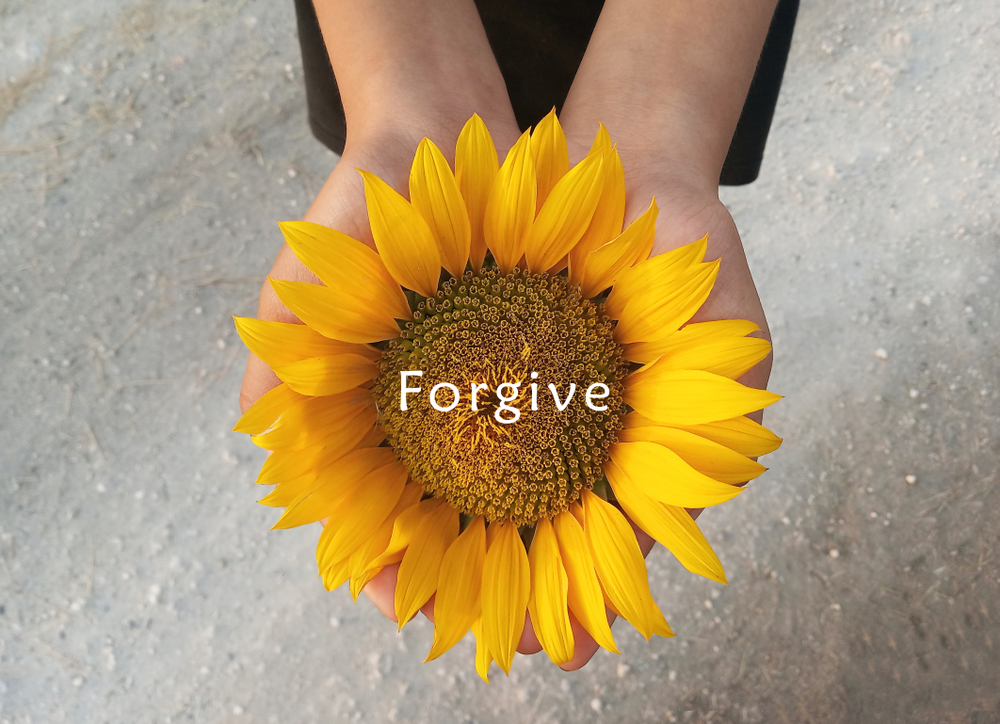
Forgiveness Is a Gift We Give Ourselves
Have you ever heard the saying that forgiveness is a gift we give ourselves?
One of my favorite quotes by Rumi reminds us:
"Your task is not to seek for love, but merely to seek and find all the barriers within yourself that you have built against it."
Forgiveness isn't about pretending something didn't happen or excusing another person's behavior. It's about freeing yourself from carrying the emotional weight of the past so your heart can begin to heal.
Forgiveness is a deeply personal journey. Sometimes it means forgiving another person. Sometimes it means forgiving yourself. Often, it means both.
As an integrative psychotherapist, I've found that healing happens most gently when we approach forgiveness with curiosity, compassion, and an understanding of our nervous system—not judgment or pressure.
Why Self-Forgiveness Is Often the Hardest Part
Many of us find it easier to extend compassion to others than to ourselves.
We replay old conversations, regret decisions we've made, or criticize ourselves for not knowing what we know now. We get stuck in thoughts like:
- "If only I had..."
- "I should have known better."
- "What's wrong with me?"
But the truth is, we all make decisions based on the emotional resources, experiences, and understanding we had at the time.
As Maya Angelou wisely said,
"When we know better, we do better."
Healing begins when we stop punishing ourselves for being human.
Self-Compassion Helps Us Heal Our Inner Parts
One of the most beautiful concepts in Internal Family Systems (IFS), also known as parts work, is that we are made up of many different inner parts, each trying to protect us in its own way.
Perhaps there's a part of you that carries shame.
Another part may hold anger or resentment.
A perfectionistic part may constantly criticize you in an effort to prevent future mistakes.
There may even be a younger part that still feels rejected, frightened, or unseen.
Rather than pushing these parts away or wishing they didn't exist, healing invites us to become curious about them.
Every part developed for a reason.
Even the parts we dislike were often trying to help us survive difficult experiences.
When we meet these younger or protective parts with compassion instead of criticism, something begins to soften. We discover that we don't have to exile the parts of ourselves that carry pain. Instead, we can listen to them, understand what they need, and gently help them feel safe enough to let go of burdens they've been carrying for years.
Self-forgiveness often begins by extending grace to the younger version of ourselves who was simply doing the best they could with the knowledge, support, and emotional capacity they had at the time.
Forgiveness Is Connected to the Heart
In many healing traditions, forgiveness is one of the central themes of the Heart Chakra.
The heart represents love, compassion, connection, and emotional balance.
When we hold onto resentment—whether toward someone else or ourselves—we often notice it not only emotionally, but physically. Our chest may feel tight, our breathing becomes shallow, and our nervous system can remain in a state of protection.
Forgiveness doesn't erase what happened.
It simply allows us to loosen our grip on the pain so our hearts can become more open to love, connection, and peace.
Gentle Ways to Begin the Journey of Forgiveness
Accept that forgiveness is for your healing.
Forgiving someone doesn't mean approving of what happened or excusing harmful behavior. It means choosing not to let the pain continue to control your life.
Begin with yourself.
Notice where your inner critic shows up.
Practice speaking to yourself the way you would speak to someone you deeply love. If a younger part of you is carrying guilt or shame, imagine offering them understanding instead of judgment.
Journal with curiosity.
Instead of asking, "Why can't I forgive?"
Try asking:
- What part of me is still hurting?
- What does this part need from me?
- How has holding onto this pain been trying to protect me?
- What might become possible if I slowly began letting go?
Allow the answers to emerge naturally without forcing them.
Notice your self-talk.
When you hear yourself saying, "If only..." or "I should have..."
Pause.
Take a breath.
Remind yourself:
"I made the best decision I could with the awareness and emotional resources I had at the time."
This simple shift creates space for self-compassion.
A Gentle Forgiveness Meditation
Find a comfortable seated position and allow your breath to slow naturally.
There's no need to force forgiveness today.
Simply become open to the possibility that healing is available.
Notice what sensations arise in your body.
If you encounter resistance, gently acknowledge it. There may be a protective part of you that isn't ready yet—and that's okay.
Begin by silently saying:
"There are ways I've hurt others, knowingly or unknowingly, through my own emotional pain."
Pause.
Notice what you feel.
Then gently repeat:
"I ask your forgiveness. Please forgive me."
Now bring to mind those who have hurt you.
Silently say:
"There are ways I've been hurt by others, knowingly or unknowingly, through their own emotional pain."
Notice your body's response.
Without forcing anything, simply offer:
"When I'm ready, I choose to begin releasing the burden of carrying this pain."
Finally, turn toward yourself.
Imagine meeting the younger version of you with kindness.
Perhaps picture them sitting beside you.
Silently say:
"There are ways I've harmed myself through self-criticism, fear, or emotional pain."
Pause.
Then offer yourself these words:
"I forgive myself for not knowing what I couldn't yet know.
I honor the younger parts of me that were doing their best.
I choose compassion over criticism.
I am worthy of healing."
Remain quietly with your breath for several moments.
Simply notice whatever arises.
Healing rarely happens all at once.
It unfolds one compassionate moment at a time.
The Heart of Forgiveness
Forgiveness isn't about forgetting the past.
It's about changing your relationship with it.
As you begin to welcome every part of yourself—including the parts that feel ashamed, frightened, angry, or broken—you create the conditions for genuine healing.
The more compassion you offer yourself, the easier it becomes to extend compassion to others.
Perhaps forgiveness isn't something we force.
Perhaps it's something that naturally unfolds when every part of us finally feels seen, heard, and loved.
"Your task is not to seek for love, but merely to seek and find all the barriers within yourself that you have built against it." — Rumi
Want the 9 Attitudes of Mindulness Guide?
A great reminder to support you in practicing non-judgement, acceptance & gratitude!